
Understanding Production Chains in City Builders
Barley becomes flour, flour becomes bread. Understand how such chains mesh and you build an economy that runs, instead of constantly plugging holes.
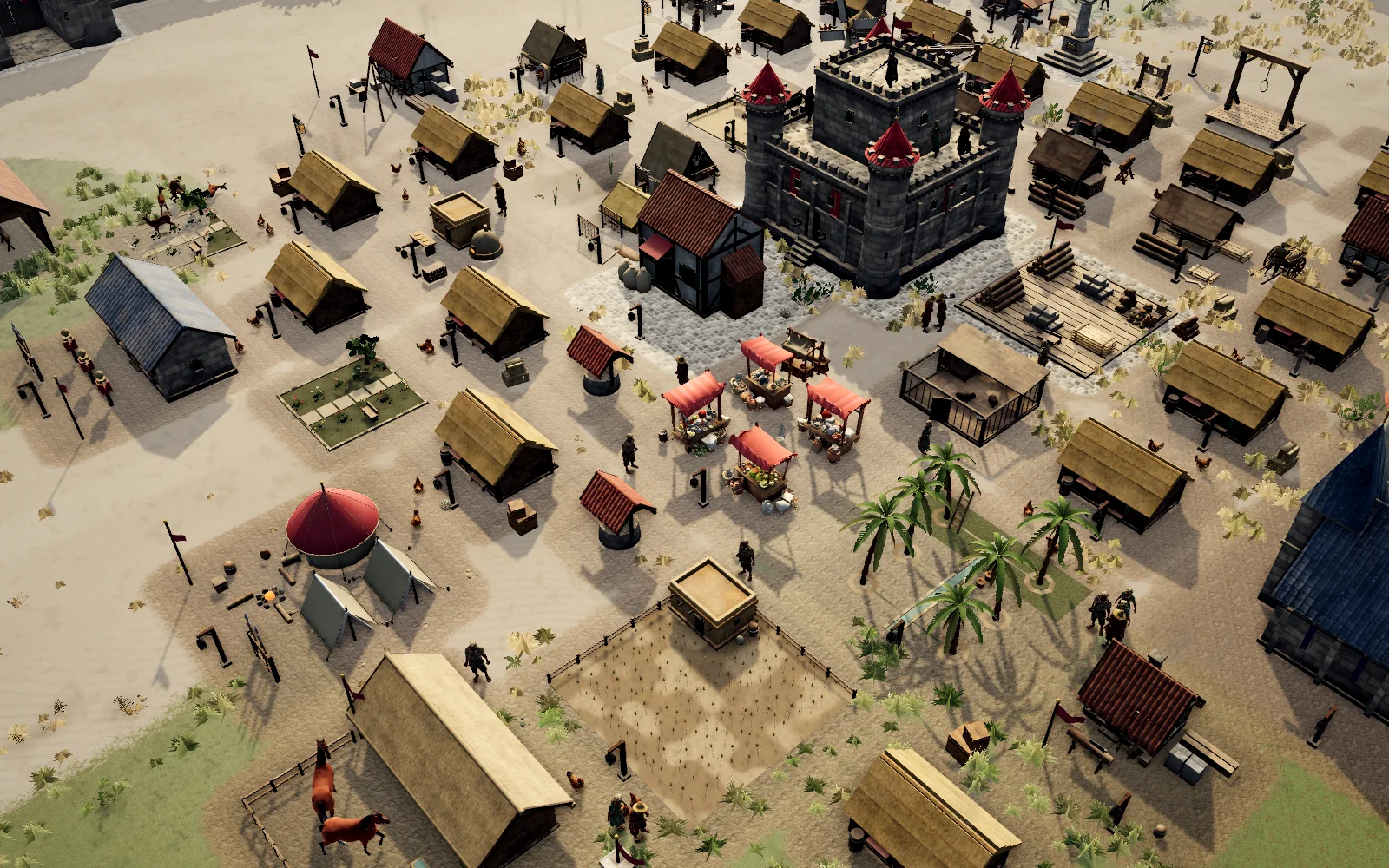
In short
A production chain links several workplaces: the first gathers a raw material, the next ones process it further, until a finished good comes out at the end. In a city builder, the weakest point of the chain decides how much comes out. So the goal is not to build as many buildings as possible, but the right ones in the right ratio.
Raw material, intermediate, end product
Almost every chain has three stages:
- Raw material: wood, stone, barley, iron ore. It comes from the landscape and usually needs a particular place – forest, rock, fertile soil.
- Intermediate: planks, flour. It is not consumed but processed further.
- End product: bread, weapons, armor. It is eaten, worn or built with.
The longer a chain is, the more workers and space it needs – but often the more valuable its result.
The ratio decides
The most important question for every chain is: how many workplaces of one stage does one of the next stage need? If one field delivers enough barley for one mill, and one mill's flour is enough for two bakeries, the ratio is 1 : 1 : 2. If you build two mills for one field instead, one mill stands idle half the time.
A good approach: start with one complete small line, watch where goods pile up and where someone is waiting, and then expand the whole chain in the same ratio.
Finding bottlenecks
A bottleneck is the point where the chain jams. How to spot it:
- Goods pile up in front of a workplace: it works too slowly, or there are too few of them.
- A workplace waits for supplies: the stage before it delivers too little.
- Carriers cannot keep up: the routes are too long, or there are no stores nearby.
The last point is often overlooked. A chain is not only production but also transport. If field, mill and bakery are far apart, the carriers spend more time on the road than the workers at work.
Buffers and stores
Stores even out fluctuations. A full stock of wood and stone lets you raise a wall quickly when an attack looms. A food reserve keeps the population fed even if a field fails. Stores that are too large tie up goods that are missing elsewhere, though – here too, balance beats extremes.
Chains in Kingdoms of Sand
Kingdoms of Sand has several chains that you expand to different degrees depending on your plan:
| Chain | Steps | Good to know |
|---|---|---|
| Planks | woodcutter's hut → sawmill | 2 logs become 3 planks |
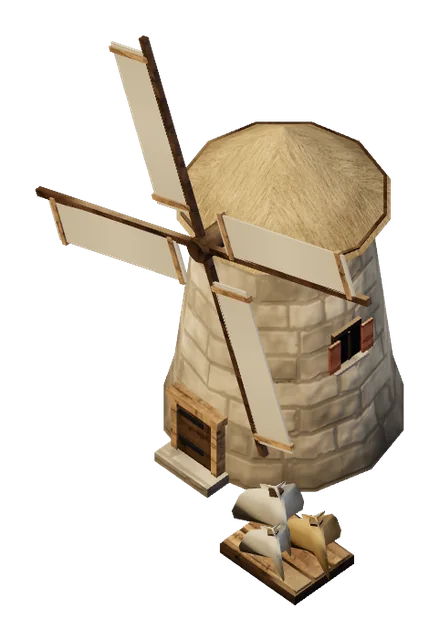
| Flatbread | barley field → windmill → clay oven | 1 field keeps 1 mill busy, 1 mill supplies 2 ovens |
| Dates | date grove | quick and cheap, but only 1 portion each |
| Goats | goatherd | cheese, or hides and meat; graze on sand too |
| Date wine | date grove → winery → tavern | lifts popularity |
| Bows and spears | sawmill → bowyer or spearmaker | need planks |
| Swords and armor | iron mine → weaponsmith or armourer | need iron |
| Leather jerkin | goatherd → tannery | from hides |
Flatbread is the longest food chain, but also the most filling: one flatbread counts as three portions and saves space in the granary. Dates and fish, on the other hand, are available quickly but eaten quickly too. Many players therefore start with dates and build up the bread chain as soon as wood and peasants allow.
At the end stands the army
In Kingdoms of Sand all chains lead towards one goal: the barracks trains soldiers from peasants, gold and weapons. Without a bowyer you have to buy every bow at the market; without an iron mine, every sword. If you gear your economy only towards food, you have a contented town but no defenders. If you only build weapons, you soon have hungry peasants.
Transport can be improved too: with wheelbarrows carriers move 10 instead of 4 goods at once, with horse carts 25. What each chain needs exactly is in the handbook, and an overview of the game is on our page about the medieval city builder.
Frequently asked questions
What is a production chain?
A sequence of workplaces that turn a raw material step by step into a finished good, such as barley into flour and flour into bread.
How do I find a bottleneck in my economy?
Watch where goods pile up and where a workplace waits for supplies. The bottleneck lies in between. Often the carriers' routes are simply too long.
What is the best food in Kingdoms of Sand?
Flatbread is the most filling and saves storage space, but needs the longest chain. Dates, fish and game are available sooner but eaten faster.
Read on
Medieval City Builder: Build a Town, Run the EconomyA medieval city builder with real production chains: barley becomes flour, flour becomes bread, wood becomes bows. Build a town and guard it in your browser.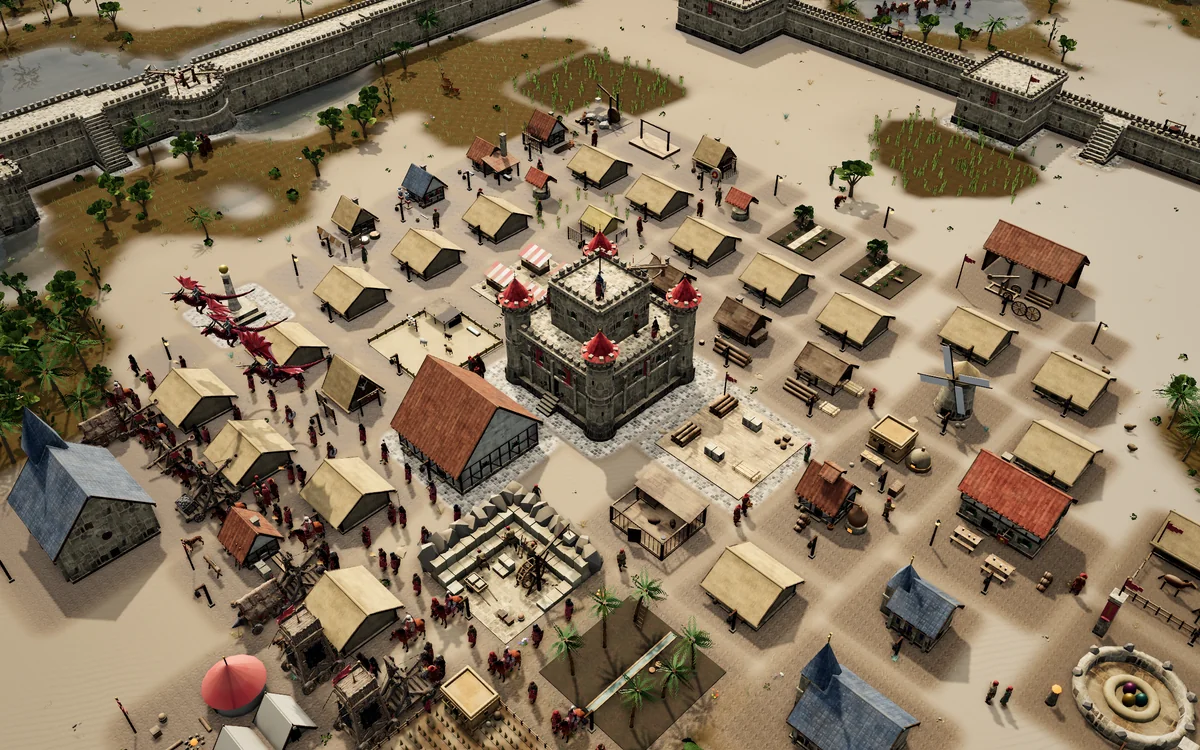 How Castles Were Built in the Middle AgesFrom earth mound and timber tower to stone castle: who built medieval castles, with which tools, how long it took and what it cost.
 Real-Time Strategy for Beginners: 10 Tips to StartNew to real-time strategy? Ten tips on economy, scouting, army and defense that will make your first matches go much better.