
How Castles Were Built in the Middle Ages
Without engines or steel girders, people raised castles that still stand today. Good planning, many hands, simple machines and a great deal of time made it possible.
In short
The first castles in north-western Europe were built of earth and timber. From the 11th and 12th centuries, builders turned more and more to stone. A stone castle was built under a master mason with stonecutters, masons, carpenters, smiths and many laborers. Depending on its size and the money available, construction took a few years to several decades, and many castles were rebuilt again and again over the centuries.
The beginnings: earth and timber
An early and widespread form was the motte-and-bailey castle: an artificial earth mound, the motte, with a timber tower on top, surrounded by a palisade and a ditch. At the foot of the mound lay a fenced courtyard, the bailey, with service buildings. The Normans built many of them after conquering England in 1066. Such a castle could be raised in weeks or months – ideal for a lord who needed to secure land quickly.
Timber had drawbacks, though: it burned, rotted and could hardly resist throwing machines. Whoever could afford it later replaced the timber tower with stone.
The right place
Before building began, the site was chosen. A hilltop castle on a mountain or rocky spur used steep slopes as natural protection; only one side needed strong fortification, often with a ditch cut into the rock. A lowland castle on flat ground protected itself with moats, marshes or a river. Water, building material close by and a position on a road, a ford or a border the castle was meant to control all mattered too.
Materials: stone, mortar, timber
Where possible, stone came from the immediate surroundings, often straight from the castle rock or the ditch – so the ditch was dug at the same time. The outer faces of the walls were built of dressed stone, while the core was often filled with rubble and mortar.
The mortar was made from burnt lime, sand and water. The lime was burnt in kilns on the building site. Timber was needed in huge quantities: for scaffolding, roof frames, floors, gates and tool handles.
Tools and machines
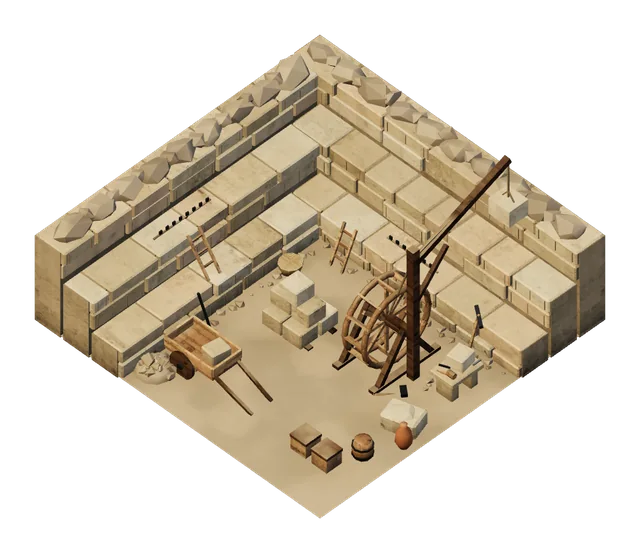
Stonecutters worked with hammers, chisels, points and squares. Stones were lifted with winches, pulleys and the treadwheel crane: one or two men walked inside a large wooden wheel and so wound up the rope. On many old walls you can still see the putlog holes where the beams of the scaffolding were fixed.
Masons' marks on the stones still show who cut which block – so the craftsmen could be paid for their work.
How long did it take to build a castle?
That depended above all on money. King Edward I of England had several large castles built in Wales from 1283; Conwy Castle was built between 1283 and 1289, with hundreds of workers on site at once. The costs were enormous. Lesser lords, on the other hand, built over decades, section by section, as the money came in.
In France, the building site of Guédelon has shown since 1997 how long it takes without modern technology: a castle is being built there using 13th-century methods, and the work has been going on for almost three decades.
Who built the castles?
| Trade | Job |
|---|---|
| Master mason | planned and led the work |
| Quarrymen | broke the stone out of the rock |
| Stonecutters | dressed blocks, window and gate arches |
| Masons | laid the walls with mortar |
| Lime burners | burnt the lime for the mortar |
| Carpenters | built scaffolding, cranes, roofs and gates |
| Smiths | kept tools sharp, made ironwork |
| Laborers | carried stone, sand and water |
In the game: castle building in Kingdoms of Sand
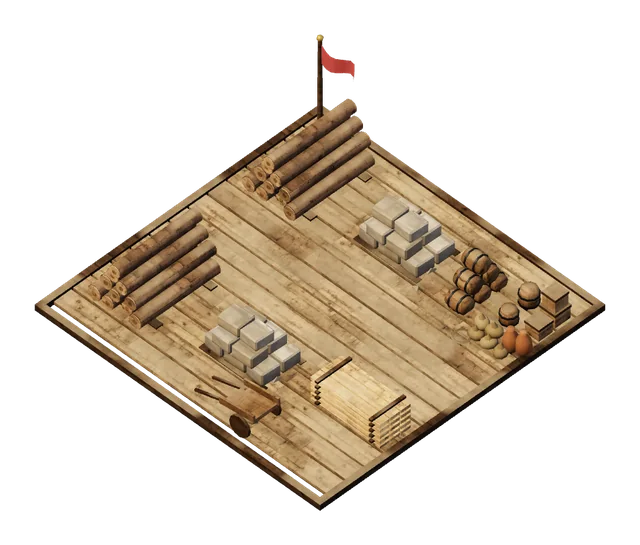
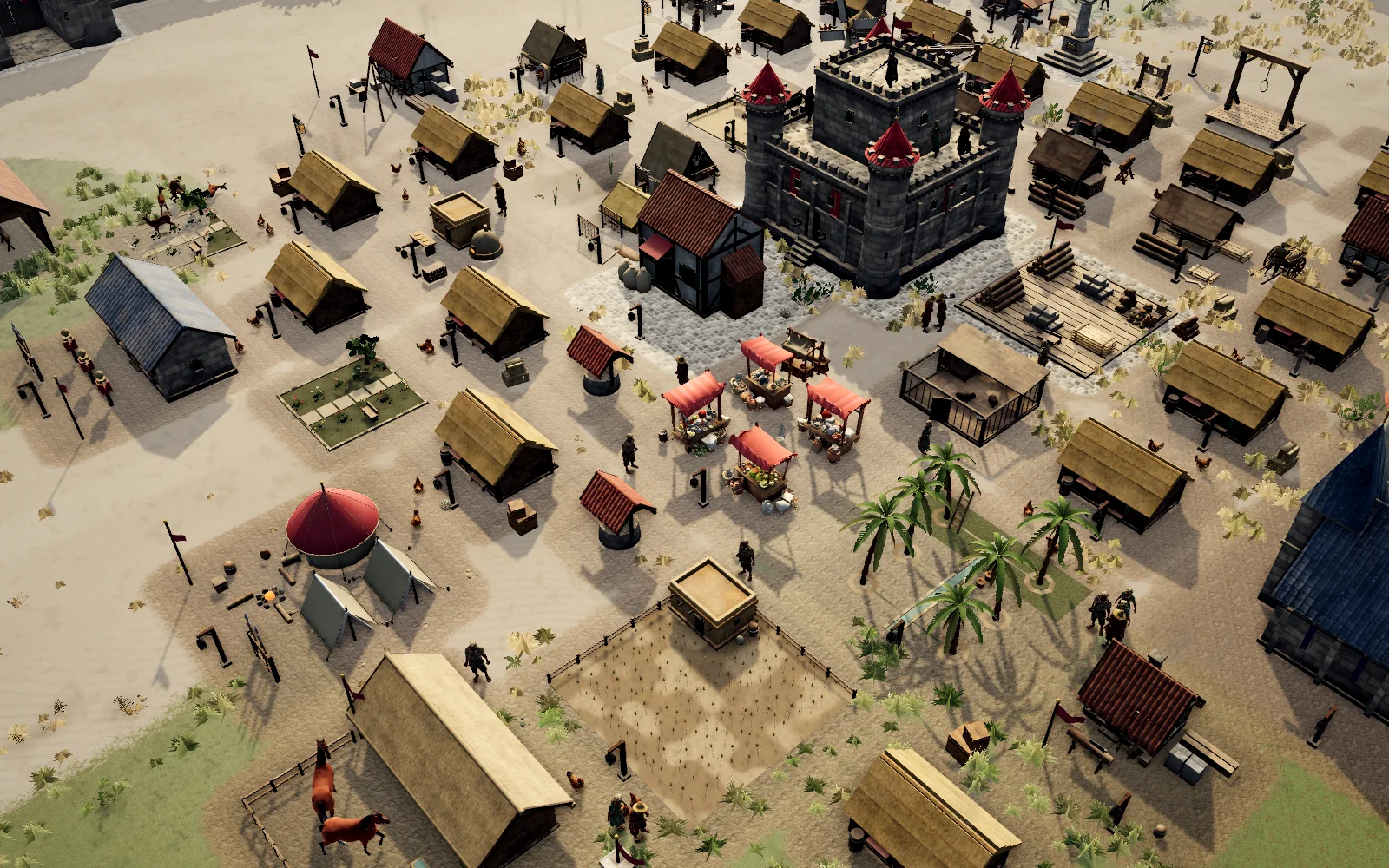
In Kingdoms of Sand building a castle is a question of economy, just as it was then. Without materials, no wall goes up:
- The woodcutter's hut supplies wood, and the sawmill turns two logs into three planks.
- The quarry has to stand on bedrock and supplies stone for walls and towers.
- Builders from the builders' lodge raise buildings and walls piece by piece. The more of them work on a site, the faster it goes up.
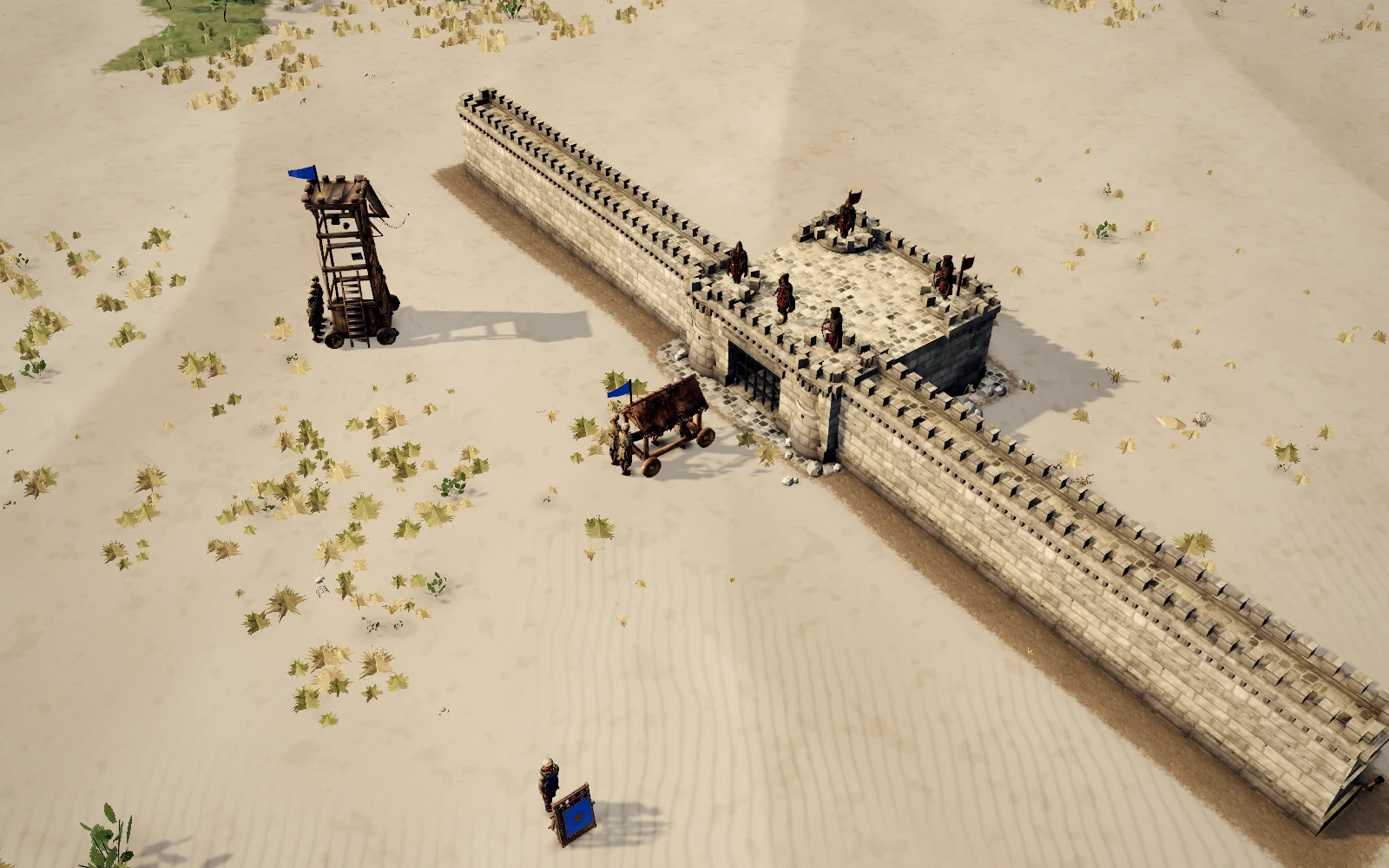
At the start a cheap palisade with 450 hit points is enough, and it can later be upgraded to a stone wall – just like the timber castles that later got stone. How wood, stone and food fit together is explained in our guide to production chains, and which parts make up a finished castle in parts of a castle.
Frequently asked questions
How long did it take to build a castle?
A few months for a timber castle, several years to decades for a stone castle. With plenty of money a large royal castle such as Conwy could go up in around six years; others, such as Caernarfon, were still unfinished after decades. Smaller castles grew over generations.
What was medieval mortar made of?
Burnt lime, sand and water. The lime was usually burnt right on the building site.
What is a motte-and-bailey castle?
An early type of castle: an artificial earth mound with a timber tower, surrounded by a palisade and a ditch, with a fenced courtyard at its foot.
Read on
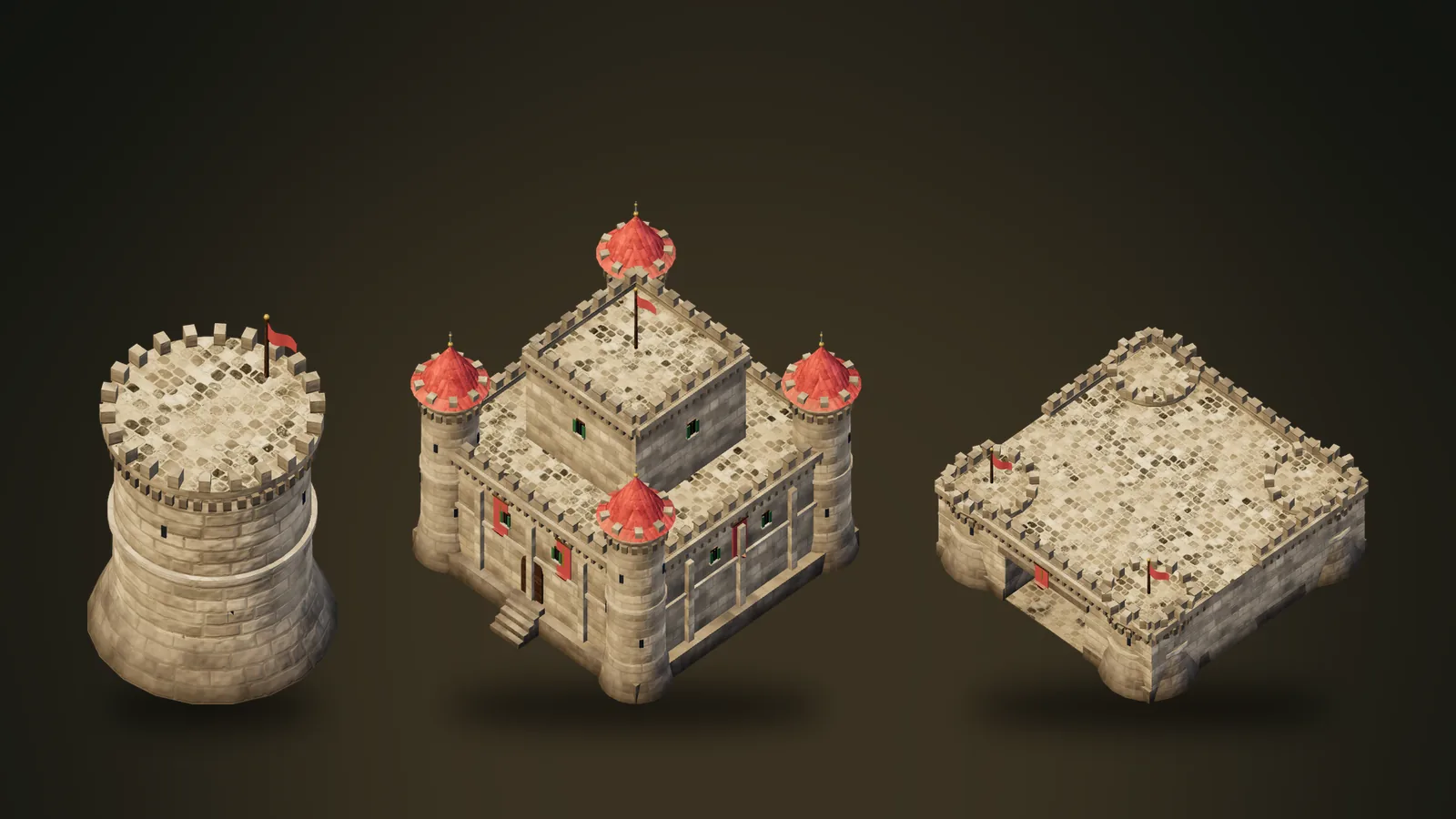 Parts of a Castle ExplainedKeep, curtain wall, gatehouse, bailey: how a medieval castle was laid out and what each part was for – explained in plain words, with pictures.
 Desert Castles: Fortresses of Stone and Mud BrickCrusader castles, citadels and mud-brick fortresses: how castles were built in the desert, how they got water and why some still stand today.
 Understanding Production Chains in City BuildersWhat production chains are, how to find bottlenecks and how to keep an economy in balance – explained with bread, planks and weapons as examples.