
Desert Castles: Fortresses of Stone and Mud Brick
Heat, sand and scarce water set castle builders very particular problems. Their answers include some of the most impressive fortresses in the world.
In short
Castles in deserts and dry lands had to secure one thing above all: water. Whoever held a spring, an oasis or a well controlled the routes through the land. Builders used what they found on the spot – limestone and sandstone, but in many regions also mud. Thick walls kept attackers out and the heat out at the same time.
Crusader castles in the Middle East
In the 12th and 13th centuries the crusader states built many castles in what is now Syria, Lebanon, Israel and Jordan. They often stood at the edge of the desert and watched over caravan routes.
The best known is the Krak des Chevaliers in Syria. The Knights Hospitaller received the castle in 1142 and expanded it into a mighty concentric castle with two rings of walls. The inner wall rises from a steep, sloping stone base, the glacis, which hindered ladders and miners alike. Only in 1271 did the Mamluk sultan Baibars take the castle.
Further south, in today's Jordan, lies Kerak Castle. Built from 1142, it controlled the routes between Syria and Egypt. Saladin besieged it in vain in 1183 and 1184; only after a long blockade did it fall to his forces in 1188.
Citadels of the Islamic world
The rulers of the Islamic world built mighty fortresses too. The Citadel of Aleppo towers on a hill above the city and was extended over centuries; its approach leads over a steep bridge and through a winding gatehouse. In Cairo, Saladin began a citadel on a spur of the Mokattam hills in 1176. A deep well was cut into the rock to supply it with water.
Typical of such fortresses are bent entrances: the path through the gate turns once or several times, so attackers cannot build up speed or line up a battering ram.
Castles of mud
In North Africa and Arabia many fortifications were built of rammed earth and mud brick. Mud was available everywhere, kept out the heat well and could be worked with few tools. Well-known examples are the fortified villages, the ksour (singular ksar), and the fortified houses, the kasbahs, of southern Morocco. The ksar of Aït-Ben-Haddou is a UNESCO World Heritage Site.
Mud has one weakness: rain washes it away. Mud castles therefore need constant repair. Once abandoned, they crumble within a few decades.
The siege of Masada
One of the most famous sieges of antiquity took place in the desert by the Dead Sea. The fortress of Masada stood on a mesa with steep rock faces, laid out by King Herod with large cisterns and storerooms. In 73 or 74 AD Roman troops piled up a huge ramp against its western side to bring a siege tower and a battering ram up to the wall. Remains of the ramp can still be seen today.
What a desert castle needs
| Challenge | Solution |
|---|---|
| Water | wells, cisterns, a site by a spring or oasis |
| Heat | thick walls, small windows, inner courtyards |
| Building material | local stone or mud |
| Wide, open land | tall towers with a long view |
| Attacks on the gate | bent entrances, gatehouses |
| Undermining | glacis, building on bedrock |
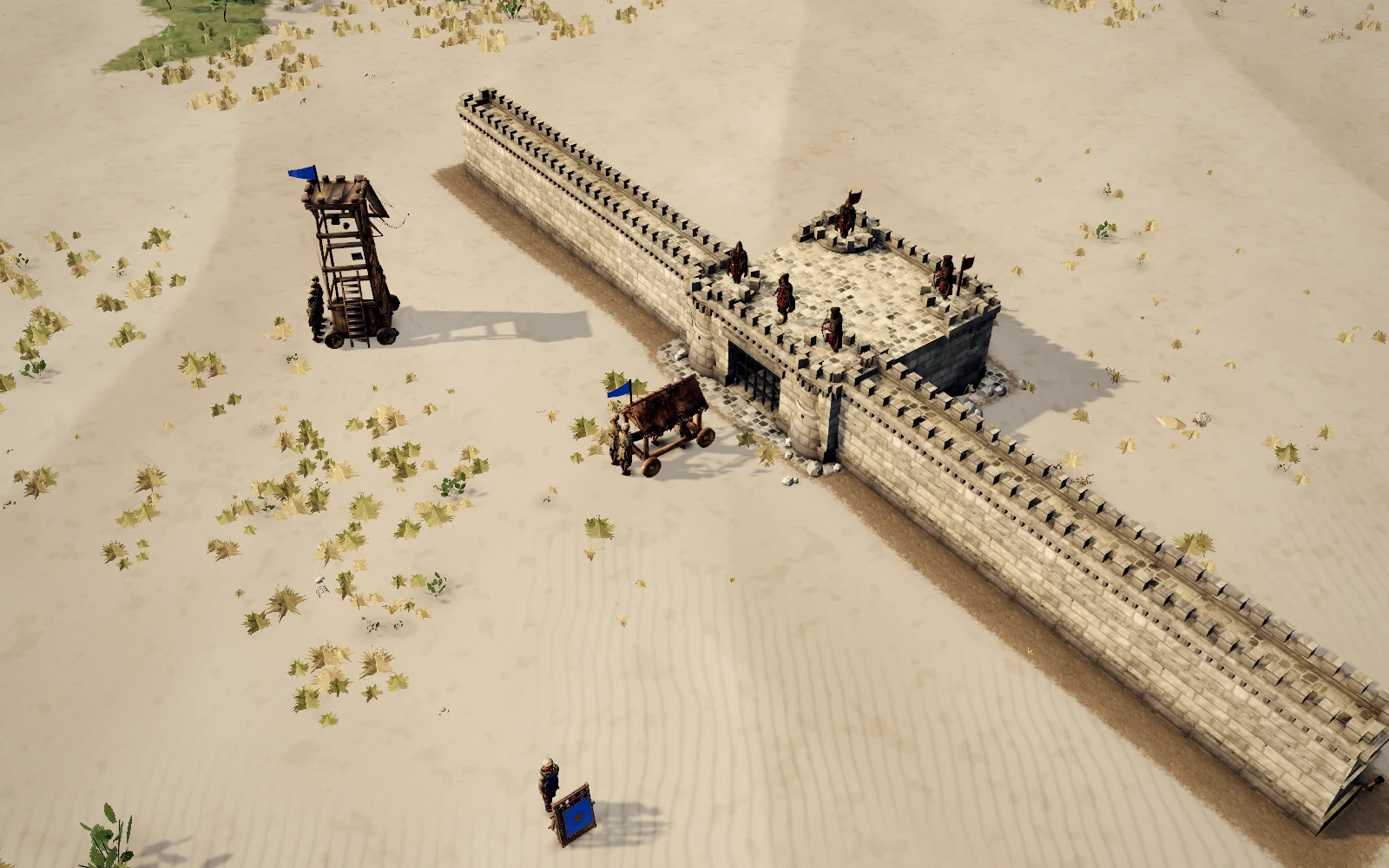
In the game: castles in the desert of Kingdoms of Sand
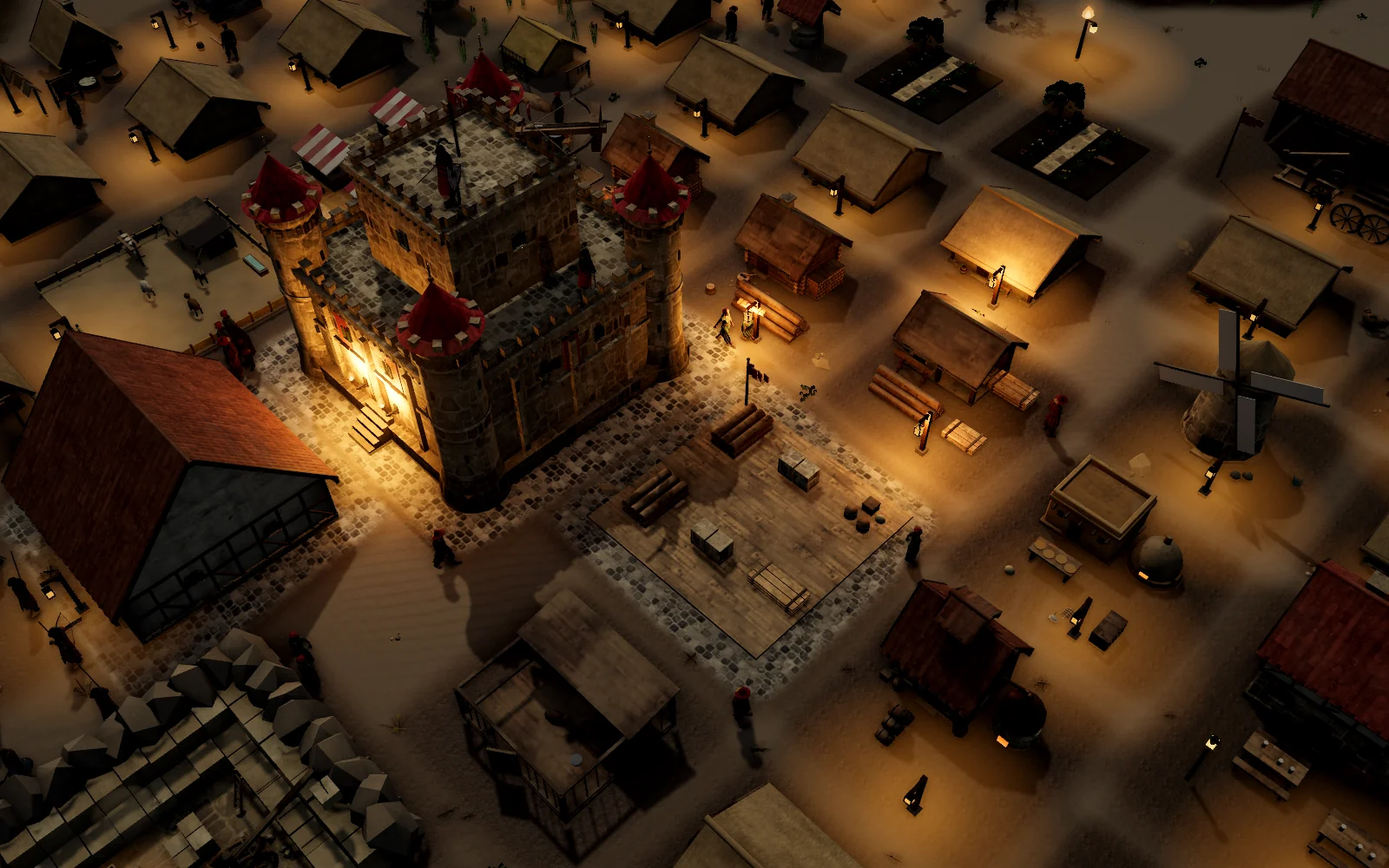
Kingdoms of Sand is set in a medieval desert world with oases, castles and dragons. Here too, a lot revolves around fertile land and water:
- The date grove needs fertile grassland in the oasis, while goats graze on sand as well.
- The fisher's hut has to stand by the water, the pitch boilery in the swamp.
- The quarry needs bedrock and the iron mine iron ore – whoever holds these spots has material for walls and weapons.
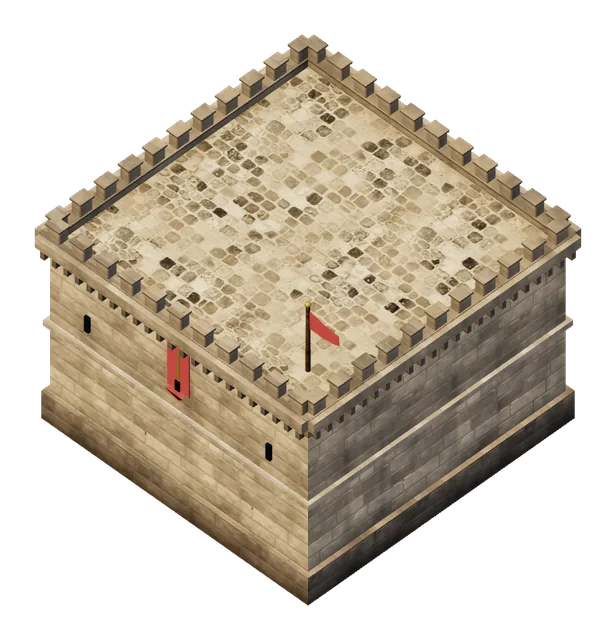
- A lookout is a very tall, slender tower with the longest view, while a bastion has room for many archers.
Where you build your castle therefore already shapes the match. Which parts belong to a castle is in our guide to parts of a castle.
Frequently asked questions
What is the most famous desert castle?
The Krak des Chevaliers in Syria is considered one of the best-preserved crusader castles. It stands in the hills at the edge of the desert, though, not in the middle of the sand.
Why were desert castles built of mud?
Mud was available everywhere, easy to work and kept the heat out. It does, however, need regular repair.
What is a bent entrance?
A gateway whose path turns once or several times. Attackers cannot build up speed or line up a battering ram.
Read on
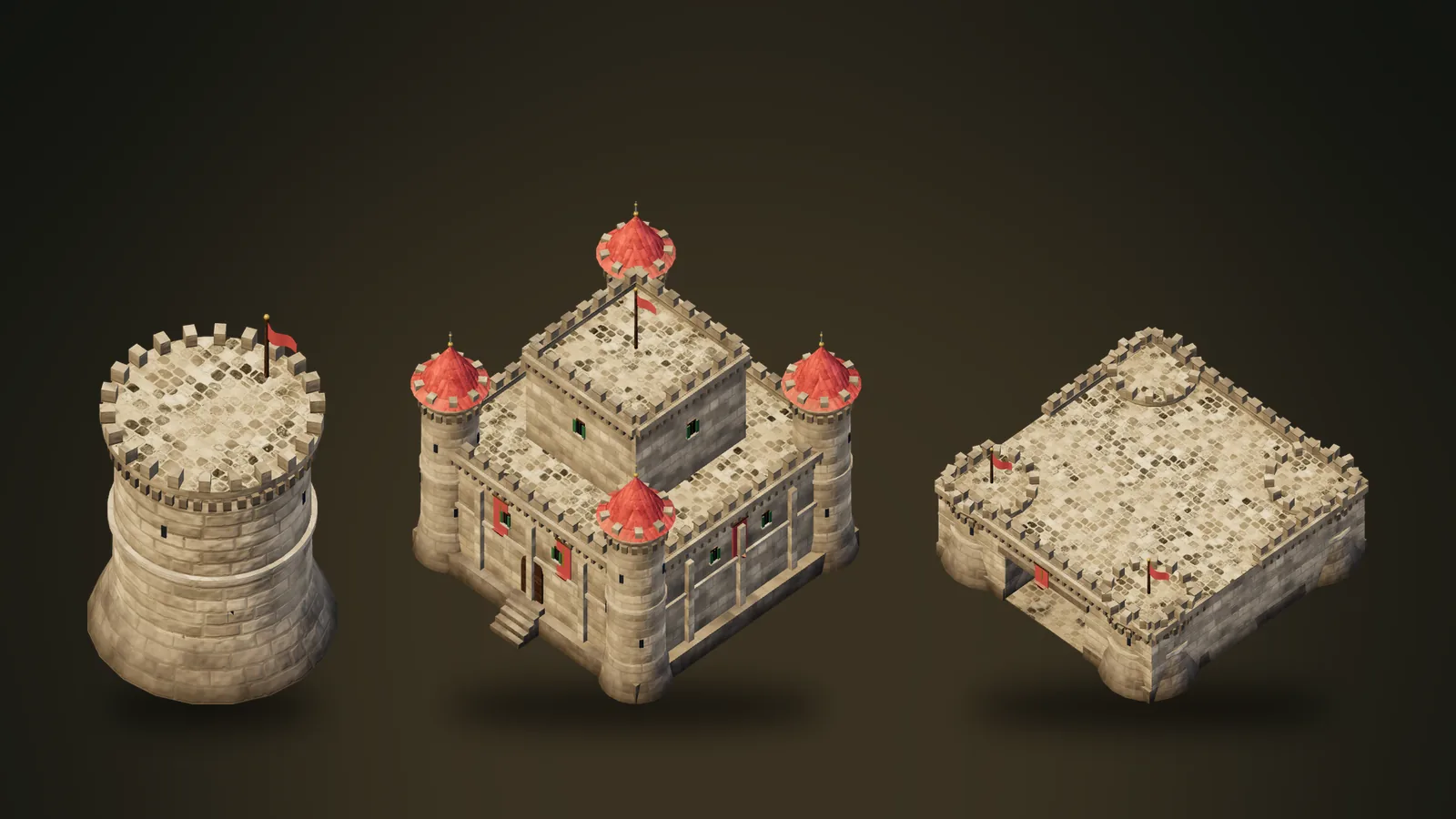 Parts of a Castle ExplainedKeep, curtain wall, gatehouse, bailey: how a medieval castle was laid out and what each part was for – explained in plain words, with pictures.
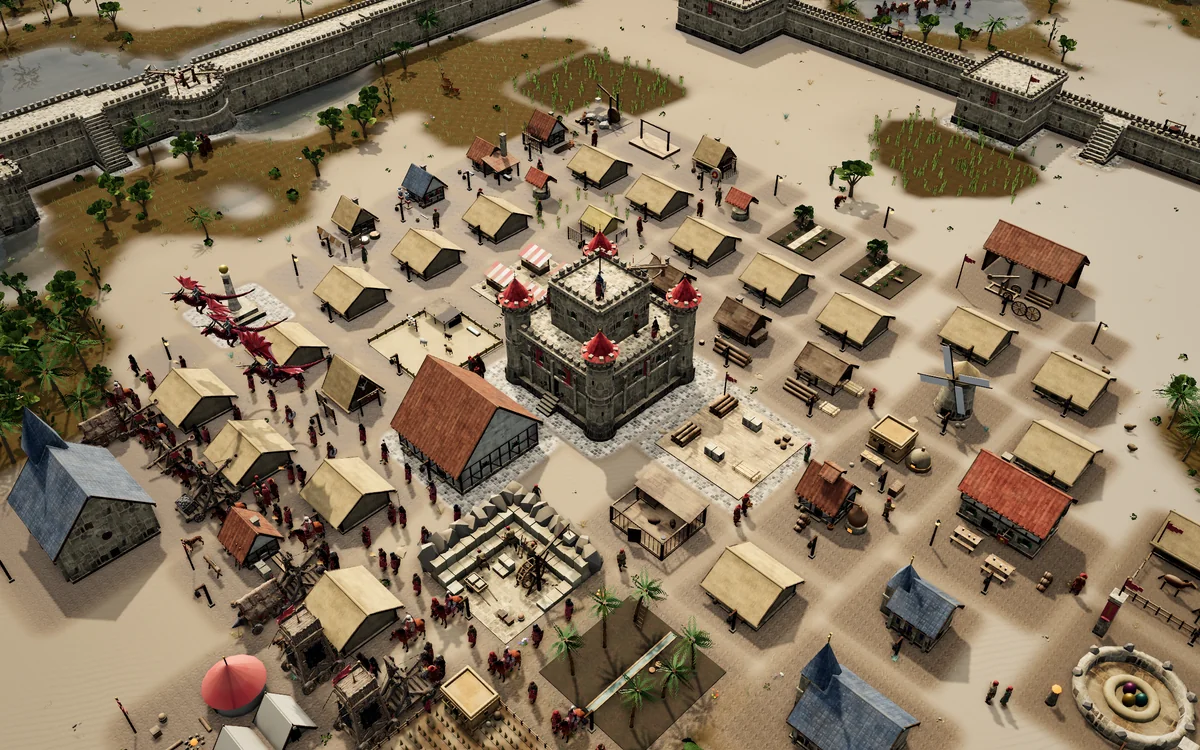 How Castles Were Built in the Middle AgesFrom earth mound and timber tower to stone castle: who built medieval castles, with which tools, how long it took and what it cost.
 Castle Defenses: How Was a Castle Defended?Walls, moats, pitch and stores: how medieval defenders held their castle against besiegers – and how you defend your own castle in the game.