
Parts of a Castle Explained
A castle was a home, a seat of government and a fortress all at once. Each of its parts had a job – from the ditch in front of the wall to the keep at its heart.
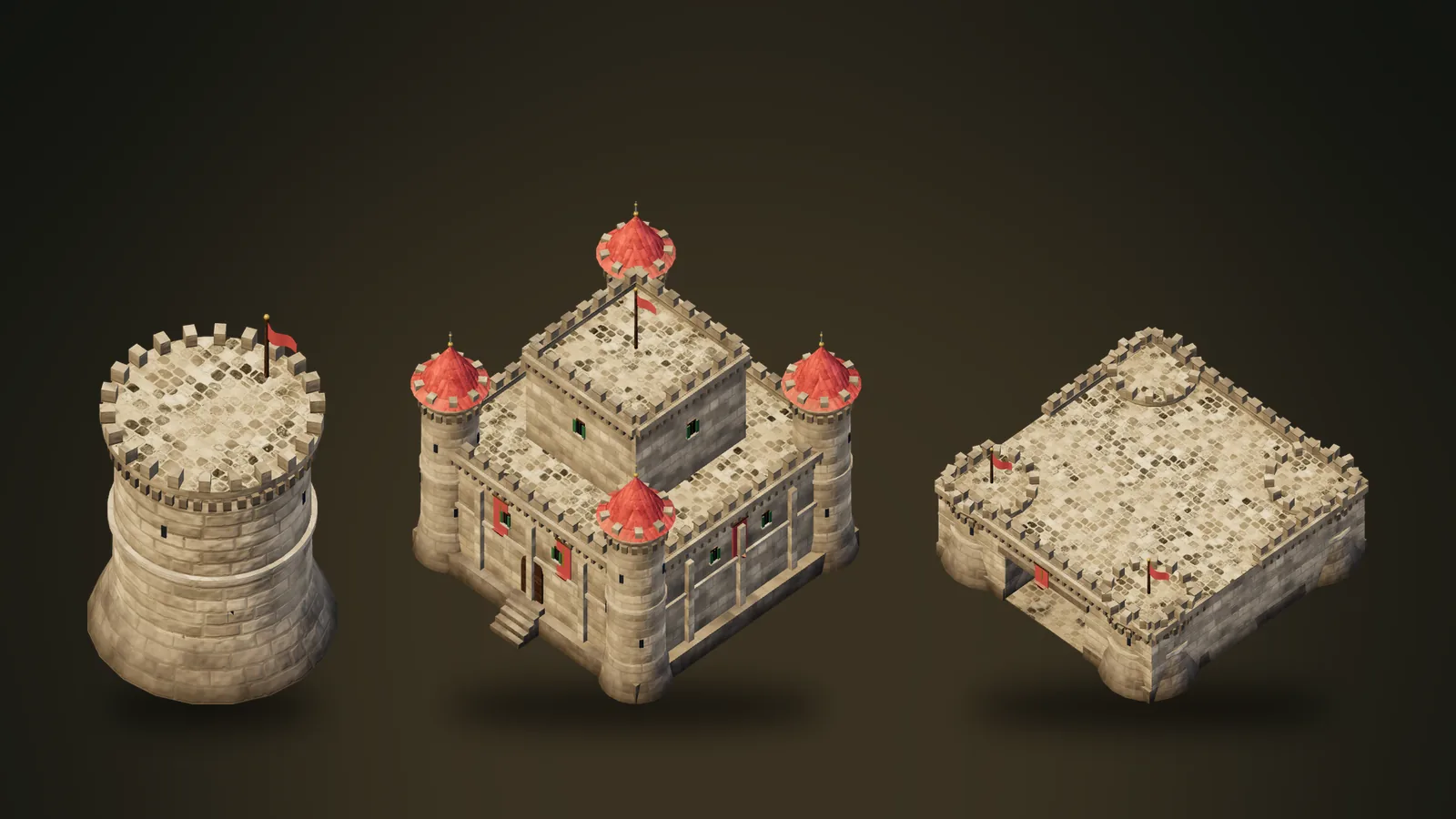
In short
A typical medieval castle consisted of a curtain wall with gates and towers, a strong main tower, the keep, a hall for living and feasting, and service buildings in the courtyard, the bailey. In front there was often a ditch or moat and sometimes a second, lower wall. No two castles were alike: what a castle looked like depended on the ground, on its builder's money and on the time it was built.
Broadly, there are hilltop castles on mountains and rocky spurs, which used the terrain as protection, and lowland castles on flat ground, which often surrounded themselves with water. The parts, however, are much the same almost everywhere.
Curtain wall, wall walk and battlements
The curtain wall enclosed the whole site. Along its top ran the wall walk, where the defenders stood behind the battlements. They shot through the gaps, the crenels, and took cover behind the raised parts, the merlons. Narrow arrow slits in walls and towers let them shoot without giving attackers much to aim at.
In wartime some castles fitted wooden hoardings to the top of the wall: roofed galleries that projected beyond it. Through openings in the floor, stones could be dropped on attackers at the foot of the wall. Later these were replaced by stone versions, known as machicolations.
Towers
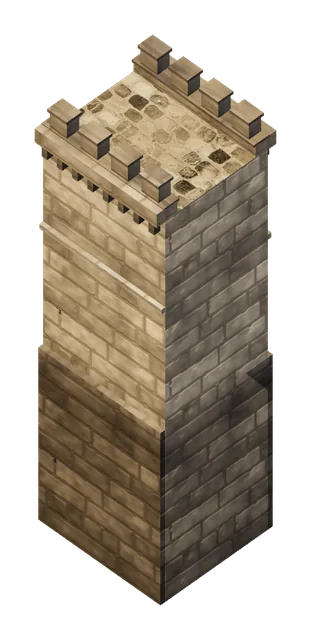
Wall towers stood at regular intervals along the curtain wall and often projected outwards. From there the defenders could shoot along the wall and hit attackers at its foot from the side – this is called flanking fire. Round towers offered rams and missiles less to work on than square ones, which is why they became more common from the 13th century.
The keep
The keep is the strongest tower of a castle. In England and France it was often a large residential tower, where the lord lived and from which the castle was run; it was also the last refuge if the rest of the castle fell. Its entrance was usually on an upper floor, reached by an external stair that was easier to defend.
In German-speaking lands the main tower, the Bergfried, was usually not lived in. It served as a lookout, a symbol of power and a last refuge, with an entrance high above the ground that could only be reached by a ladder or wooden stair.
Hall, chapel and bailey
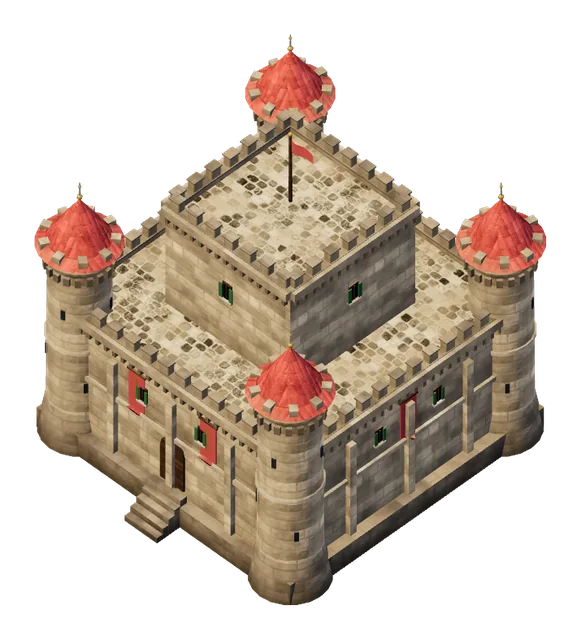
The great hall was where the lord's household ate, held court and celebrated. Beside it there were often a chapel, kitchens, stables, workshops and storerooms. A well or a cistern was essential: a castle without water could not survive a siege.
Larger castles were divided into an outer bailey with stables and workshops and an inner bailey with the hall and keep. Whoever took the outer bailey still faced a second wall.
Gatehouse, drawbridge and moat
The gate was the weakest point of every castle, so it was guarded especially well. A gatehouse with two flanking towers, a portcullis of iron or timber and heavy doors held attackers up. In the vault above the passage there were sometimes murder holes, through which things could be dropped on intruders.
In front of the gate there was often a moat crossed by a drawbridge. Raised, it also closed off the gate. A water-filled moat also kept battering rams and siege towers away and made it harder to undermine the wall.
Outer walls and concentric castles
Many castles had a lower outer wall in front of the main wall. Anyone who got over the outer wall stood in a narrow space under fire from the higher main wall. Taken to its logical end, this leads to concentric castles with several rings of walls, each higher than the one outside it.
The parts of a castle at a glance
| Part | Job |
|---|---|
| Curtain wall | encloses the castle, carries the wall walk |
| Battlements and arrow slits | cover and firing positions for the defenders |
| Wall tower | hits attackers at the wall from the side |
| Keep | strongest tower, residence or last refuge |
| Great hall | the lord's living and feasting hall |
| Gatehouse and portcullis | guard the entrance |
| Moat and drawbridge | keep attackers and siege engines away |
| Outer wall | second line of defense in front of the main wall |
| Well or cistern | water for the siege |
In the game: a castle in Kingdoms of Sand
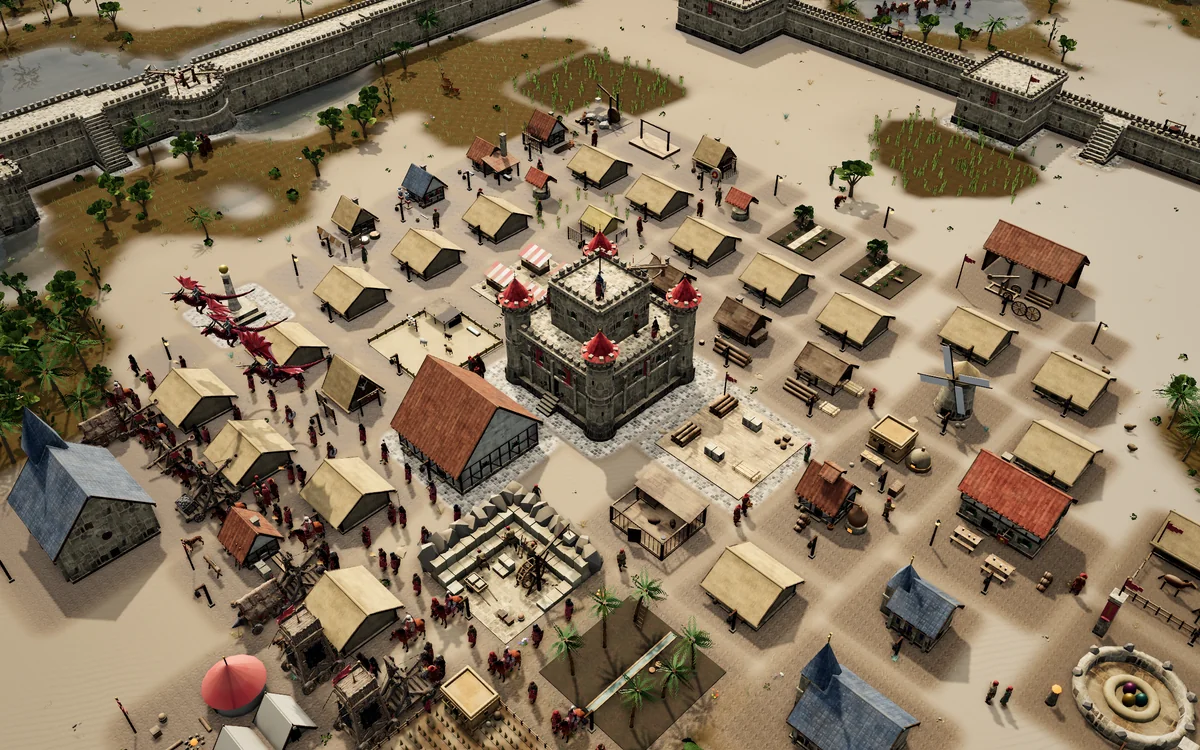
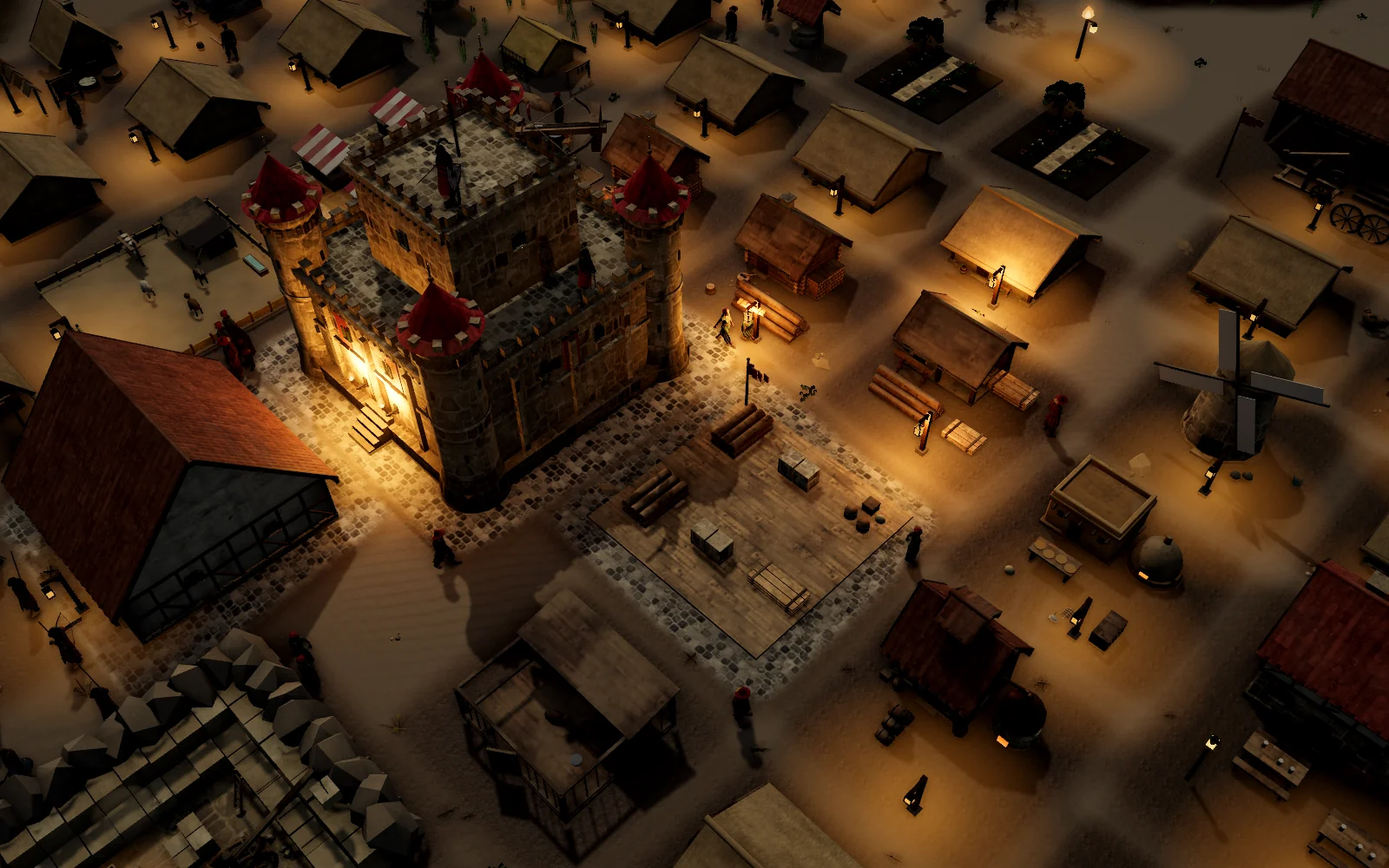
In Kingdoms of Sand you build these parts yourself. Your keep is the seat of your lord and has 4000 hit points. If it falls, the castle passes to the conqueror – just as in history, it is the last refuge. Around it you draw walls with 850 hit points or thick ramparts with 2000, on which archers stand higher and better covered. Stairs lead up to the wall walk.
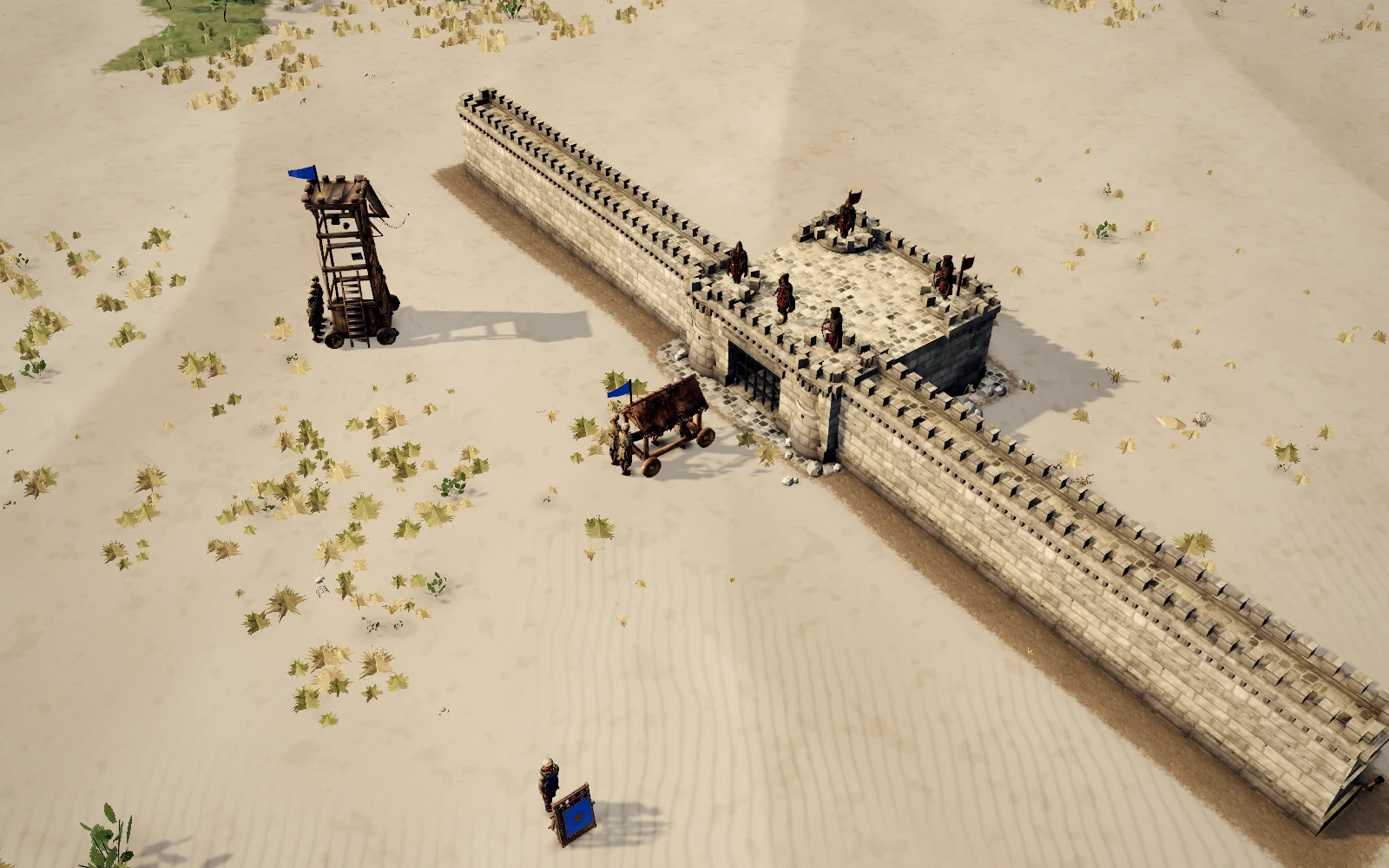
A plain gatehouse has 1600 hit points, the great gatehouse 3000. Towers in the wall give archers more range and damage, a moat stops troops and engines, and a drawbridge lets your own people across. How to use all of this against an attack is in our guide to castle defenses.
Frequently asked questions
What are the main parts of a castle?
The curtain wall with its wall walk and battlements, the towers, the keep, the great hall, the gatehouse with portcullis and drawbridge, the moat and the bailey with its service buildings.
What is the difference between a keep and a bailey?
The keep is the castle's strongest tower. The bailey is the walled courtyard around it, where the hall, stables, workshops and stores stood.
Why did castles have moats?
A moat kept battering rams, ladders and siege towers away from the wall and made undermining harder. Filled with water it was even more effective.
Read on
 How Castles Were Built in the Middle AgesFrom earth mound and timber tower to stone castle: who built medieval castles, with which tools, how long it took and what it cost.
 Castle Defenses: How Was a Castle Defended?Walls, moats, pitch and stores: how medieval defenders held their castle against besiegers – and how you defend your own castle in the game.
 Desert Castles: Fortresses of Stone and Mud BrickCrusader castles, citadels and mud-brick fortresses: how castles were built in the desert, how they got water and why some still stand today.