
Trebuchet vs Catapult: The Difference Explained
Both throw stones at walls, yet they work in completely different ways. The catapult uses twisted ropes, the trebuchet uses gravity – and that makes a big difference in the result.
In short
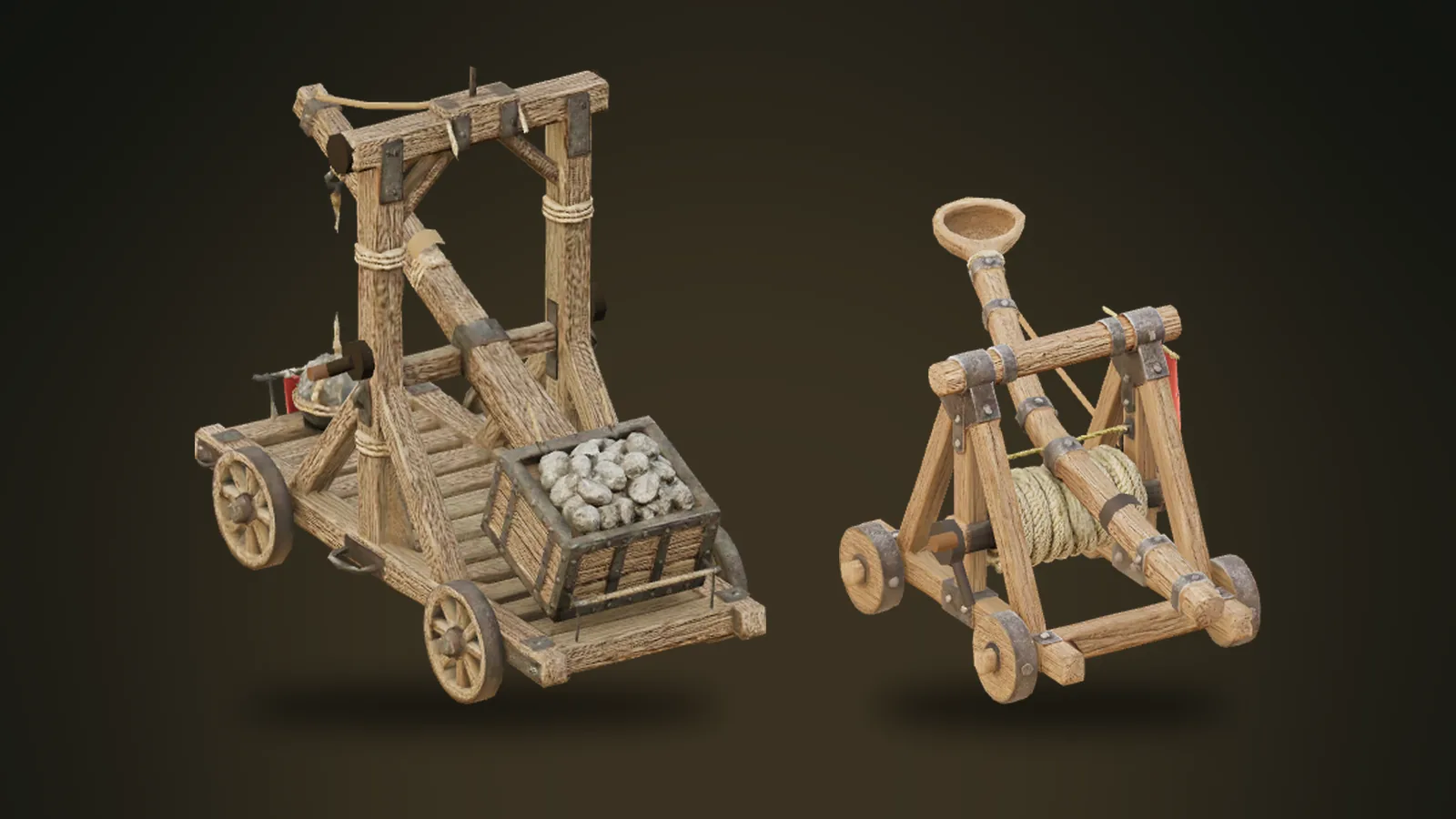
A catapult stores energy in twisted ropes or animal sinew and hurls its missile with a short, hard stroke. A trebuchet lifts a heavy counterweight and lets it drop. The long throwing arm swings round and flings the missile from a sling.
The result: the catapult is smaller, quicker to set up and more mobile. The trebuchet throws heavier stones further and, above all, more consistently, because a weight always weighs the same while ropes slacken.
How a catapult works
The word catapult is old and was used for many kinds of throwing and shooting machines. Today it usually means a torsion engine: a bundle of twisted ropes or sinew holds a throwing arm under tension. With a winch the crew pulls the arm back, places a stone in the cup and releases the catch. The arm snaps forward until it strikes a padded beam, and the stone flies on.
The best known is the Roman onager, named after the wild donkey because it kicked backwards when it fired. Torsion engines were fairly compact and could be taken along on wheels. Their drawback: ropes and sinew react to damp and lose tension over time. Every shot lands a little differently.
How a trebuchet works
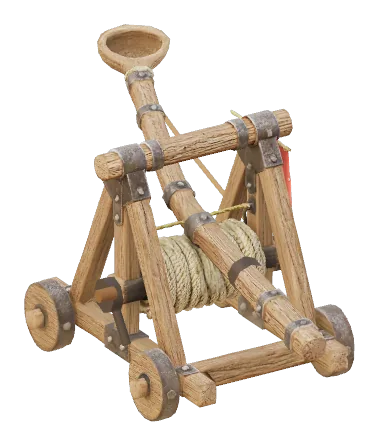
The trebuchet is a lever. A box of stones or earth hangs on the short end of the throwing arm, a sling with the missile on the long end. The crew pulls the long end down with winches or treadwheels, lifting the counterweight. When the arm is released, the weight drops, the arm swings up, and the sling opens at the right moment.
Earlier forms, traction trebuchets, were still pulled by many people on ropes. The counterweight trebuchet spread around the Mediterranean in the 12th century and soon became the most powerful siege weapon before the cannon. Large trebuchets threw stones of roughly 50 to 100 kilograms several hundred meters. A famous example is the "Warwolf", which King Edward I of England had built at Stirling Castle in Scotland in 1304.
The comparison
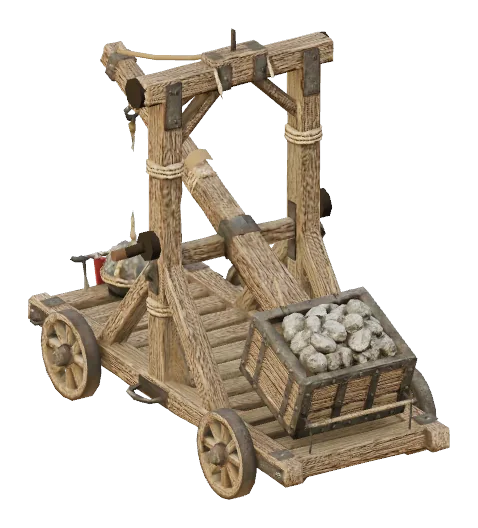
| Catapult (torsion) | Trebuchet (counterweight) | |
|---|---|---|
| Power | twisted ropes or sinew | falling counterweight |
| Missile | lighter, flatter throw | heavy, high arc |
| Range | medium | long |
| Accuracy | varies with the tension | very consistent |
| Build | compact, mobile | large, usually built on site |
| Use | against troops too | against walls and towers |
In the game: catapult and trebuchet in Kingdoms of Sand
In Kingdoms of Sand both engines have exactly the roles they had in history. You build both in the siege workshop, and both need engineers as crew.
- The catapult throws 16 tiles and hits walls as well as troops. It cannot hit anything right in front of it: closer than 3 tiles it is defenseless. One engineer is enough to crew it.
- The trebuchet throws 24 tiles, further than any tower can shoot, and smashes towers. In return it is barely mobile, needs 2 engineers and does not shoot at troops. Closer than 6 tiles it cannot throw.
That makes the trebuchet the weapon for a planned siege: set it up outside the defenders' range and take the towers down one by one. The catapult goes along with an assault and keeps the archers on the wall in cover. A ballista on a tower roof helps against both: it shoots 17 tiles and targets siege engines first. More on that in our guide to castle defenses.
Frequently asked questions
Is a trebuchet a catapult?
In the broad sense yes, since both are throwing machines. Technically, though, the trebuchet is a lever with a counterweight, and the classic catapult is a torsion engine with twisted ropes.
Which was stronger, the trebuchet or the catapult?
Against walls the trebuchet: it threw heavier stones further and more accurately. The catapult was handier and ready for action sooner.
When was the trebuchet invented?
Traction trebuchets pulled by people came first. The counterweight trebuchet spread in the 12th century and was used in Europe and the Middle East until cannons replaced it.
Read on
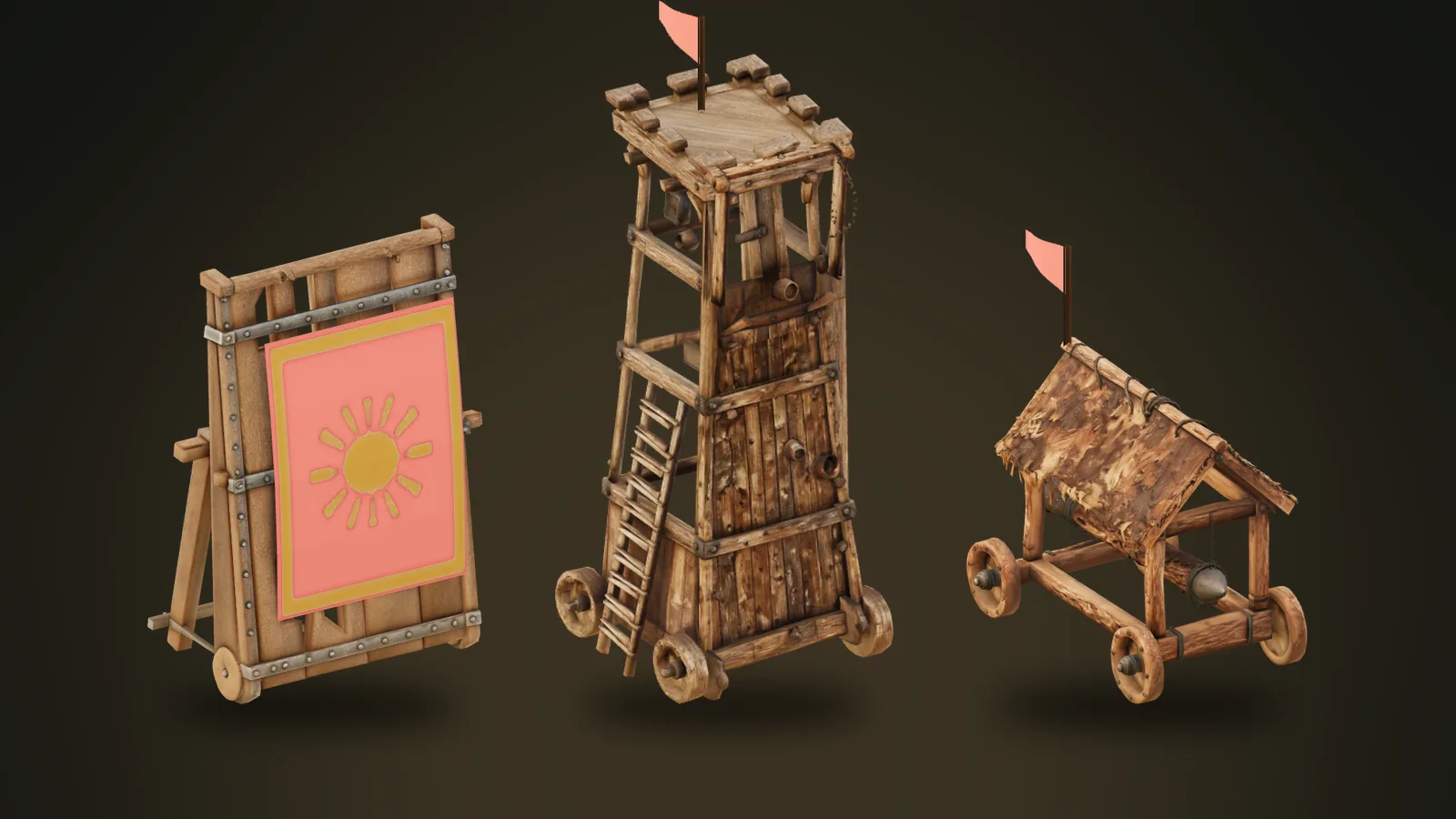 Medieval Siege WeaponsBattering ram, siege tower, trebuchet, scaling ladder and miners: which siege weapons existed in the Middle Ages, how they worked and what they could do.
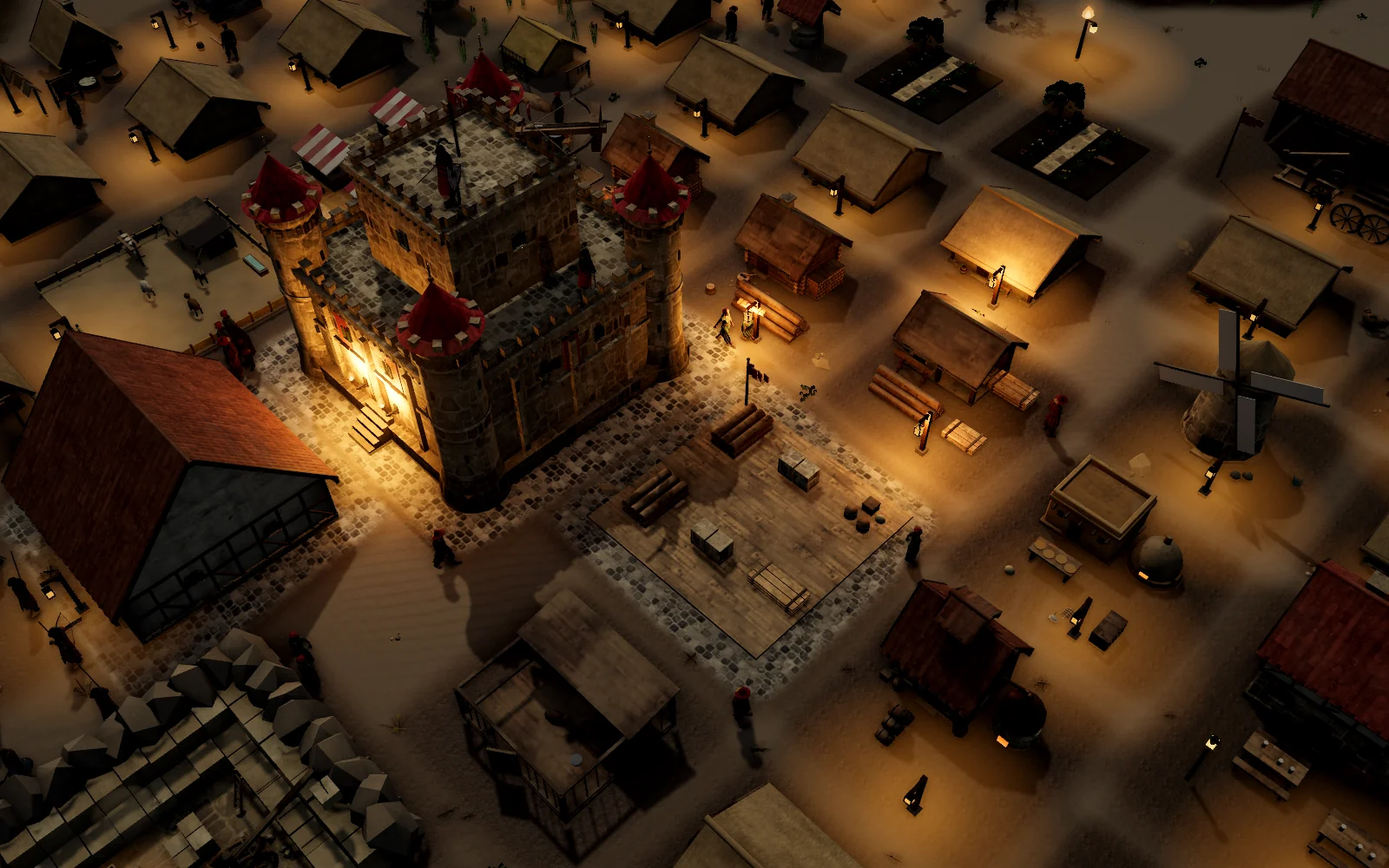 Castle Defenses: How Was a Castle Defended?Walls, moats, pitch and stores: how medieval defenders held their castle against besiegers – and how you defend your own castle in the game.
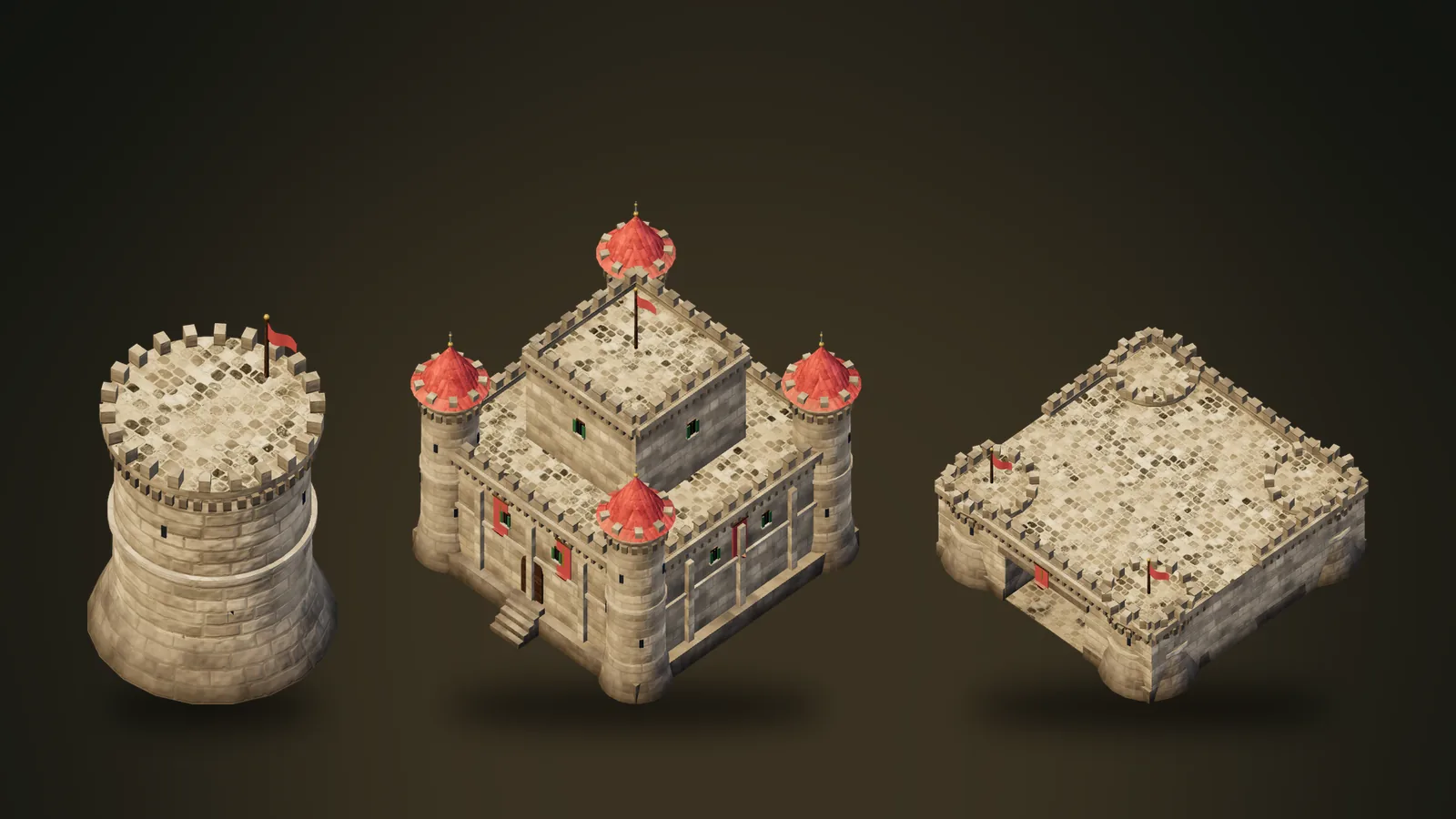 Parts of a Castle ExplainedKeep, curtain wall, gatehouse, bailey: how a medieval castle was laid out and what each part was for – explained in plain words, with pictures.